High-Performance Moisture Resistance OSB - Superior Structural Panels for Demanding Applications

All Categories

Get a Free Quote

Our representative will contact you soon.
Email
WhatsApp
Name
Company Name
Message
0/1000

moisture resistance osb

Moisture resistance OSB represents a revolutionary advancement in engineered wood products, specifically designed to withstand challenging environmental conditions where traditional oriented strand board would fail. This specialized building material combines the structural integrity of conventional OSB with enhanced moisture-resistant properties, making it an ideal choice for construction projects in humid climates or areas prone to moisture exposure. The core technology behind moisture resistance OSB involves the integration of specialized resins and wax additives during the manufacturing process, creating a barrier that prevents water penetration while maintaining the board's structural characteristics. Unlike standard OSB, this moisture-resistant variant undergoes additional treatment processes that seal the wood strands and create a protective matrix throughout the entire panel. The manufacturing process utilizes advanced bonding agents that cure under high temperature and pressure, forming cross-linked polymer networks that repel moisture effectively. These technological innovations ensure that moisture resistance OSB maintains its dimensional stability even when exposed to varying humidity levels or direct moisture contact. The product finds extensive applications in residential and commercial construction, particularly in areas such as subflooring systems, wall sheathing, roof decking, and exterior applications where moisture exposure is inevitable. Construction professionals increasingly prefer moisture resistance OSB for basement applications, bathroom installations, and outdoor structures due to its superior performance characteristics. The material's versatility extends to industrial applications where traditional wood products would deteriorate rapidly under moisture stress. Additionally, moisture resistance OSB serves as an excellent substrate for various finishing materials, including vinyl flooring, ceramic tiles, and laminate surfaces, providing a stable foundation that resists warping and swelling that could compromise the integrity of surface installations.

New Product Releases

Moisture resistance OSB delivers exceptional performance benefits that translate directly into cost savings and project longevity for builders and property owners. The primary advantage lies in its superior dimensional stability, which prevents the warping, swelling, and buckling commonly associated with standard wood products when exposed to moisture. This stability eliminates costly repairs and replacements that frequently plague construction projects using conventional materials. The enhanced durability of moisture resistance OSB significantly extends the lifespan of structures, reducing long-term maintenance requirements and associated expenses. Property owners benefit from reduced risk of mold and mildew growth, as the moisture-resistant properties prevent the accumulation of trapped moisture that creates ideal conditions for biological growth. Installation advantages include easier handling and cutting, as moisture resistance OSB maintains consistent density throughout the panel, resulting in cleaner cuts and more predictable fastener holding power. The material's consistent performance characteristics simplify construction planning and reduce waste, as builders can confidently specify moisture resistance OSB without concerns about variable quality or performance degradation. Time savings represent another significant advantage, as the reliability of moisture resistance OSB reduces the need for protective measures during construction and eliminates delays caused by moisture-related damage to building materials. The versatility of moisture resistance OSB allows for simplified inventory management, as a single product can serve multiple applications traditionally requiring different specialized materials. Quality control benefits emerge from the standardized manufacturing process, ensuring consistent performance across all panels and eliminating the variability often encountered with natural wood products. Environmental advantages include reduced waste generation, as the longevity and reliability of moisture resistance OSB minimize replacement needs and contribute to sustainable construction practices. The material's compatibility with various fastening systems and construction techniques provides flexibility in design and installation methods, accommodating different project requirements without compromising performance or requiring specialized tools or techniques.

Latest News

What are the Differences Between Dekek FOSB, MDF, PB, and Plywood?

31

Oct

What are the Differences Between Dekek FOSB, MDF, PB, and Plywood?

View More
Dekek Zero-Formaldehyde-Added FOSB(Fine-Surface OSB) – Dekek Boards Guard Your Safe & Secure Home

20

Oct

Dekek Zero-Formaldehyde-Added FOSB(Fine-Surface OSB) – Dekek Boards Guard Your Safe & Secure Home

View More
How Do Decorative Panels Enhance Modern Interior Design?

21

Oct

How Do Decorative Panels Enhance Modern Interior Design?

View More
What Makes OSB a Reliable Choice for Walls and Roofs?

18

Nov

What Makes OSB a Reliable Choice for Walls and Roofs?

View More

Get a Free Quote

Our representative will contact you soon.
Email
WhatsApp
Name
Company Name
Message
0/1000

moisture resistance osb

Advanced Moisture Barrier Technology

Advanced Moisture Barrier Technology

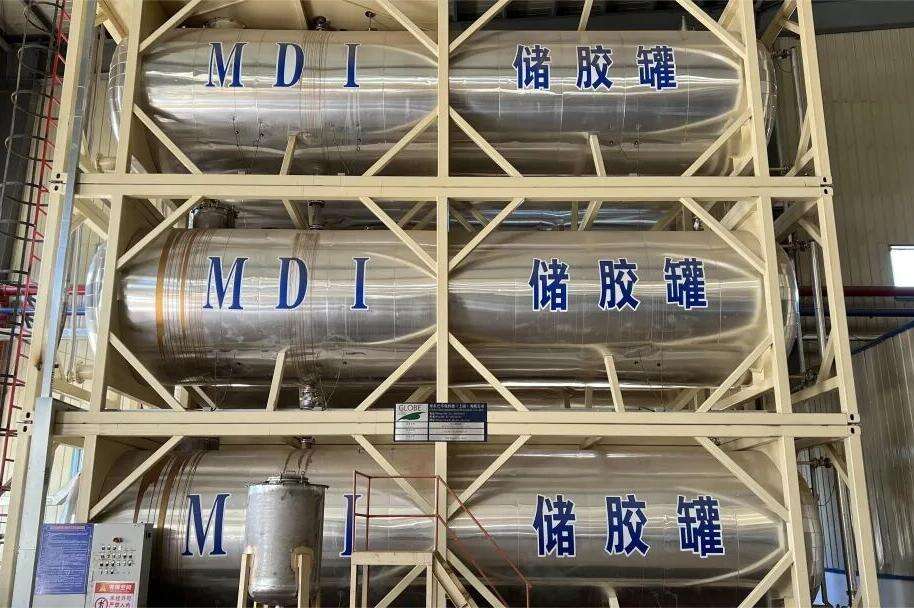
The cornerstone of moisture resistance OSB lies in its sophisticated moisture barrier technology, which fundamentally transforms how engineered wood products interact with environmental moisture. This innovative technology incorporates multiple layers of protection, beginning with specially formulated phenolic resins that create molecular bonds between wood strands, forming an impermeable matrix that blocks moisture penetration at the microscopic level. The manufacturing process involves the precise application of hydrophobic wax emulsions that penetrate deep into the wood fiber structure, creating a comprehensive moisture shield that extends throughout the entire panel thickness. Unlike surface treatments that can wear away or become compromised over time, this integrated barrier technology becomes an integral part of the board's composition, ensuring long-lasting protection that cannot be separated from the substrate. The advanced polymer chemistry employed in moisture resistance OSB utilizes cross-linking agents that cure under controlled temperature and pressure conditions, creating a three-dimensional network that maintains its integrity even under extreme moisture conditions. This technology demonstrates superior performance compared to conventional moisture treatments, showing resistance to both liquid water and water vapor transmission. The barrier system operates on multiple levels, providing both immediate protection against surface moisture and long-term resistance to humidity-driven moisture migration. Testing protocols demonstrate that moisture resistance OSB maintains structural integrity and dimensional stability even after prolonged exposure to saturated conditions, making it suitable for applications where traditional materials would fail. The technology's effectiveness stems from its ability to prevent moisture-induced swelling that typically leads to panel distortion and structural compromise. This comprehensive protection system ensures that moisture resistance OSB performs consistently across diverse environmental conditions, from high-humidity coastal regions to areas with significant seasonal moisture variations, providing builders with confidence in material performance regardless of climatic challenges.
Superior Structural Performance and Durability

Superior Structural Performance and Durability

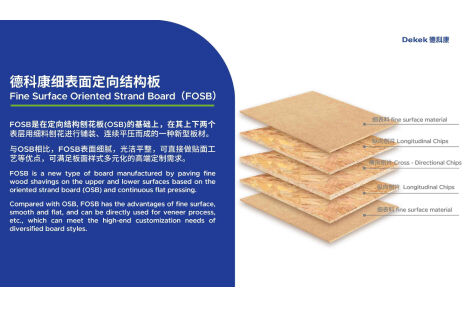
Moisture resistance OSB delivers exceptional structural performance that surpasses conventional wood products through its engineered composition and enhanced manufacturing processes. The oriented strand configuration optimizes load distribution across the panel, creating superior strength-to-weight ratios that enable broader spanning capabilities and reduced support requirements in construction applications. This structural efficiency translates into material savings and simplified construction details, as fewer support members are needed to achieve equivalent load-bearing performance. The manufacturing process aligns wood strands in specific orientations, with outer layers oriented parallel to the panel length for maximum bending strength, while core layers are positioned perpendicular to provide dimensional stability and resistance to panel buckling. This engineered approach eliminates the natural inconsistencies found in solid wood products, such as knots, grain variations, and density fluctuations that can create weak points and unpredictable performance characteristics. The durability advantages of moisture resistance OSB extend beyond moisture protection to include enhanced resistance to mechanical stresses, thermal cycling, and environmental aging. Accelerated aging tests demonstrate that moisture resistance OSB maintains its structural properties over extended periods, showing minimal degradation in strength, stiffness, or fastener holding capacity. The consistent density throughout the panel ensures uniform fastener performance, eliminating the splitting and withdrawal problems commonly encountered with natural wood products. Impact resistance testing reveals superior performance compared to plywood and conventional OSB, with the strand configuration providing excellent damage tolerance and load redistribution capabilities. The material's thermal stability prevents seasonal movement that can compromise structural connections and surface finishes, maintaining dimensional accuracy throughout temperature fluctuations. Long-term performance studies demonstrate that moisture resistance OSB retains its structural characteristics without the gradual degradation patterns observed in other wood-based materials, ensuring structural reliability throughout the building's service life and reducing the risk of costly structural repairs or replacements.
Versatile Application Range and Installation Benefits

Versatile Application Range and Installation Benefits

The versatility of moisture resistance OSB makes it an invaluable solution for diverse construction applications, offering builders a single material that can address multiple project requirements with consistent performance and reliability. This adaptability stems from the material's balanced properties, combining moisture resistance with structural strength, workability, and compatibility with various construction systems and finishing materials. In flooring applications, moisture resistance OSB provides an ideal substrate for luxury vinyl, ceramic tile, and laminate installations, offering the dimensional stability necessary to prevent surface cracking or separation that can occur with conventional substrates. The material's smooth, consistent surface eliminates the need for extensive preparation work, reducing installation time and labor costs while ensuring optimal adhesion for flooring materials. Wall sheathing applications benefit from the material's moisture resistance properties, particularly in climates with high humidity or frequent precipitation, where traditional sheathing materials may experience moisture-related deterioration. The installation benefits extend to ease of handling and cutting, as moisture resistance OSB maintains consistent density and composition throughout, resulting in clean cuts without the splintering or tear-out commonly associated with natural wood products. Fastener installation is simplified due to the uniform density, providing predictable holding power without the pilot hole requirements often necessary with harder wood species. The material's compatibility with standard construction tools and techniques eliminates the need for specialized equipment or training, allowing construction crews to work efficiently without workflow disruptions. Quality control advantages emerge from the standardized manufacturing process, ensuring that each panel meets consistent specifications for thickness, density, and performance characteristics, eliminating the variability that can complicate construction planning and material ordering. The material's stability during storage and handling reduces waste from damage or warping, contributing to more efficient project management and cost control. Environmental considerations are addressed through the material's longevity and reduced replacement frequency, supporting sustainable construction practices while providing the performance reliability that construction professionals demand across diverse applications and challenging environmental conditions.
Get a Free Quote

Our representative will contact you soon.
Email
WhatsApp
Name
Company Name
Message
0/1000