
Modern interior design increasingly relies on versatile materials that combine aesthetic appeal with functional durability. Decorative boards have emerged as the preferred choice for custom shelving and cabinetry projects, offering unmatched flexibility in design while maintaining structural integrity. These engineered wood products provide designers and craftspeople with endless possibilities for creating personalized storage solutions that complement any interior style. Whether you're planning a complete kitchen renovation or designing custom built-in storage, decorative boards deliver the perfect balance of beauty and performance that discerning homeowners and professionals demand.
Decorative boards typically feature a medium-density fiberboard or particleboard core that provides exceptional stability and workability. This engineered foundation eliminates the natural imperfections found in solid wood, such as knots, grain irregularities, and moisture-related expansion. The uniform density throughout decorative boards ensures consistent machining results and eliminates splitting or chipping during cutting and drilling operations. Manufacturing processes compress wood fibers under controlled conditions, creating a substrate that outperforms traditional lumber in dimensional stability.
The core material undergoes rigorous quality control measures to maintain consistent thickness tolerances and surface smoothness. Advanced pressing techniques eliminate voids and density variations that could compromise structural performance in finished cabinetry. This precision manufacturing approach makes decorative boards ideal for applications requiring tight tolerances and smooth surface finishes. The engineered nature of these materials also provides predictable behavior under various environmental conditions, ensuring long-term performance in custom installations.
High-pressure laminate surfaces bonded to decorative boards offer exceptional durability and design versatility for custom projects. These thermally-fused laminates resist scratches, stains, and moisture penetration while maintaining their appearance under normal use conditions. The lamination process creates a permanent bond that won't delaminate or peel over time, even in high-humidity environments like kitchens and bathrooms. Modern laminate technology produces surfaces that closely replicate natural wood grains, stone textures, and contemporary solid colors.
Advanced printing techniques create decorative boards with incredibly realistic surface patterns that are virtually indistinguishable from natural materials. Digital printing technology allows manufacturers to reproduce exotic wood species and unique grain patterns that would be prohibitively expensive in solid wood formats. The protective clear overlay on laminated surfaces provides excellent resistance to fading from ultraviolet exposure, ensuring color stability throughout the product's service life. This surface protection makes decorative boards particularly suitable for applications requiring easy maintenance and long-term aesthetic appeal.
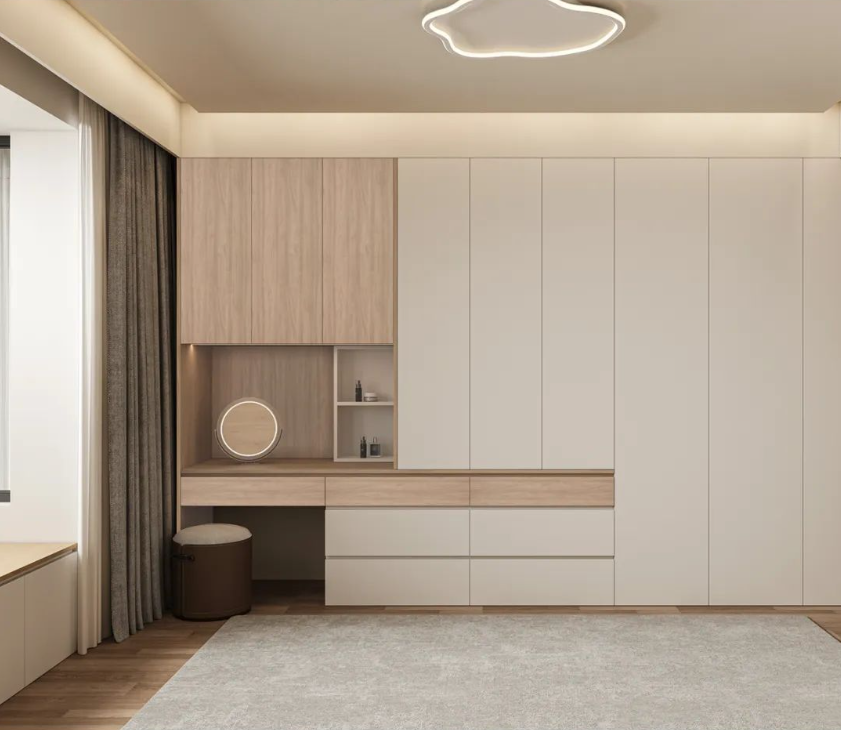
The extensive range of available finishes makes decorative boards incredibly versatile for custom shelving and cabinetry applications. Manufacturers offer hundreds of color options ranging from traditional wood tones to bold contemporary colors that complement modern design trends. Textured surfaces add tactile interest while maintaining the practical benefits of laminated construction. These diverse aesthetic options allow designers to create cohesive interior schemes or striking accent pieces that serve as focal points in residential and commercial spaces.
Pattern matching capabilities in decorative boards enable seamless visual continuity across large cabinet installations and built-in storage systems. Book-matching techniques create mirror-image grain patterns that enhance the perceived quality and craftsmanship of finished projects. Sequential matching ensures consistent color and grain flow throughout multi-panel installations, creating professional results that rival high-end solid wood cabinetry. The ability to coordinate multiple decorative board selections allows for sophisticated design schemes incorporating complementary colors and textures.
Professional edge banding solutions ensure that decorative boards present a finished appearance from every viewing angle in custom installations. Matching edge bands seamlessly integrate with surface laminates, creating the illusion of solid construction throughout the project. Pre-glued edge banding simplifies installation while providing durable protection against moisture infiltration and impact damage. The variety of available edge profiles accommodates different design preferences, from sharp contemporary lines to softly rounded traditional profiles.
Heat-activated adhesives in quality edge banding create permanent bonds that withstand thermal cycling and mechanical stress typical in cabinetry applications. Trimming techniques produce clean, precise edges that enhance the overall appearance of finished projects while protecting the substrate from environmental exposure. Professional installation of edge banding eliminates the visible core material, ensuring that decorative boards present a premium appearance throughout the installation. Proper edge sealing also prevents moisture absorption that could compromise dimensional stability over time.
Engineered construction gives decorative boards excellent load-bearing characteristics that exceed those of many natural wood products in shelving applications. The uniform density distribution provides consistent structural performance without weak spots or grain-related failure points. Properly supported decorative boards can safely carry substantial loads while maintaining their dimensional stability and surface integrity. Engineering data from manufacturers provides specific load ratings that enable designers to specify appropriate support spacing for different applications.
The predictable mechanical properties of decorative boards simplify structural calculations for custom shelving systems and built-in storage solutions. Unlike solid wood, these engineered products don't exhibit seasonal movement patterns that could compromise joint integrity or surface finishes. Consistent moisture content throughout the manufacturing process eliminates the dimensional changes associated with natural wood products. This stability makes decorative boards particularly suitable for applications requiring precise fits and consistent gaps between components.
Standard woodworking joinery techniques work effectively with decorative boards, allowing craftspeople to create strong, durable connections using familiar methods. The consistent density throughout the material ensures reliable screw holding power and clean cuts with conventional woodworking tools. Pre-drilling prevents edge splitting while maintaining strong mechanical connections that resist loosening under normal use conditions. The smooth surface of decorative boards provides excellent glue adhesion for laminated assemblies and reinforced joints.
Specialized fastening systems designed for engineered wood products optimize connection strength while preserving surface integrity in visible areas. Confirmat screws and similar specialized fasteners create strong, concealed connections that maintain the clean appearance of custom cabinetry. The uniform material composition allows for precise machining of hardware mounting holes and adjustment mechanisms. These installation advantages make decorative boards particularly suitable for complex custom projects requiring precise tolerances and professional appearance standards.
Decorative boards offer significant cost advantages over solid wood alternatives while delivering comparable or superior performance characteristics for most cabinetry applications. The engineered construction eliminates waste associated with defect removal and allows for more efficient material utilization in custom projects. Consistent sizing and quality reduce installation time and minimize field adjustments that increase labor costs. The stability of decorative boards also reduces callback issues related to seasonal movement or surface defects that commonly occur with natural wood products.
Volume availability and consistent pricing make decorative boards attractive for both small custom projects and large-scale installations. Unlike solid wood markets, which experience significant price volatility due to supply constraints and quality variations, engineered products maintain more stable pricing structures. This predictability simplifies project budgeting and reduces the risk of cost overruns due to material price fluctuations. The extended service life of properly installed decorative boards provides excellent long-term value compared to less durable alternatives.
The consistent dimensions and surface quality of decorative boards streamline installation processes and reduce labor requirements for custom projects. Pre-finished surfaces eliminate the need for field finishing operations, significantly reducing project timelines and associated labor costs. The stability of these materials minimizes adjustment requirements during installation and reduces the likelihood of fit issues that require field modifications. Professional installers appreciate the predictable behavior of decorative boards throughout the installation process.
Standard panel sizes accommodate most custom applications while minimizing waste and optimizing material utilization. The availability of oversized panels reduces the number of joints required in large installations, improving both appearance and structural integrity. Ready availability from multiple suppliers ensures project schedules aren't compromised by material delivery delays. The lightweight nature of decorative boards compared to solid wood alternatives reduces handling costs and installation complexity, particularly in upper cabinet applications.
Manufacturing processes for decorative boards maximize the utilization of wood fiber resources by incorporating materials that would otherwise be considered waste products. Small diameter trees, mill residues, and post-consumer wood products contribute to the raw material stream, reducing pressure on old-growth forests. This efficient resource utilization makes decorative boards an environmentally responsible choice for custom cabinetry projects. The engineered approach allows manufacturers to create consistent, high-quality products from renewable resources that regenerate more quickly than the hardwood species traditionally used in cabinetry.
Sustainable forestry practices increasingly support the raw material supply chain for decorative boards, ensuring long-term availability while protecting forest ecosystems. Third-party certifications verify responsible sourcing practices and environmental stewardship throughout the supply chain. The extended service life of properly manufactured decorative boards reduces replacement frequency and associated environmental impacts. These sustainability advantages make engineered products increasingly attractive to environmentally conscious consumers and designers.
Modern manufacturing processes for decorative boards incorporate low-emission adhesives and formaldehyde-free bonding systems that support healthy indoor environments. Strict emission standards govern the production of interior-grade decorative boards, ensuring they meet or exceed residential air quality requirements. Third-party testing and certification programs verify emission levels and provide assurance for sensitive applications like children's rooms and healthcare facilities. The sealed surface of laminated decorative boards further reduces any potential emissions from the core material.
Improved adhesive technology eliminates many of the concerns historically associated with engineered wood products while maintaining the structural and aesthetic advantages that make decorative boards ideal for custom applications. No-added-formaldehyde options provide the ultimate in emission control for projects where air quality is a primary concern. Regular testing and continuous improvement in manufacturing processes ensure that decorative boards contribute to healthy indoor environments while delivering the performance characteristics required for demanding cabinetry applications.
The laminated surfaces of decorative boards require minimal maintenance while providing excellent resistance to common household stains and cleaning products. Simple cleaning with mild detergents and damp cloths removes most surface contamination without damaging the protective finish. The non-porous surface prevents liquid absorption that could lead to staining or odor retention in kitchen and bathroom applications. Regular cleaning maintains the appearance of decorative boards throughout their service life without requiring refinishing or special treatments.
Resistance to common household chemicals and cleaning agents makes decorative boards suitable for applications where frequent sanitization is required. The durable surface finish withstands repeated cleaning cycles without showing wear patterns or loss of gloss. Unlike natural wood surfaces that may require periodic refinishing or conditioning, decorative boards maintain their appearance with routine care. This low-maintenance characteristic makes them particularly attractive for busy households and commercial applications where appearance consistency is important.
Properly installed decorative boards provide decades of reliable service in residential and light commercial applications while maintaining their structural integrity and surface appearance. The engineered construction eliminates many failure modes associated with solid wood cabinetry, such as splitting, checking, and grain separation. Moisture resistance prevents the swelling and shrinkage cycles that can compromise joint integrity in traditional wood construction. The stable dimensional characteristics ensure that hardware remains properly aligned and functional throughout the service life of the installation.
Impact resistance of laminated surfaces protects against minor damage from normal use while maintaining a professional appearance. The multi-layer construction distributes loads effectively, preventing localized damage that might occur with less robust materials. Quality decorative boards retain their structural properties and surface integrity even after years of heavy use in demanding applications. This long-term reliability makes them an excellent investment for custom cabinetry projects where replacement costs would be significant.
Decorative boards are commonly available in thicknesses ranging from 12mm to 25mm, with 18mm being the most popular choice for cabinet construction. The 18mm thickness provides excellent structural performance for most shelving applications while maintaining reasonable material costs. Thicker options like 25mm boards offer enhanced load-bearing capacity for heavy-duty applications or when longer unsupported spans are required. Thinner decorative boards work well for back panels, drawer bottoms, and other applications where weight reduction is beneficial.
Decorative boards exhibit superior dimensional stability compared to solid wood because the manufacturing process eliminates natural grain patterns and moisture content variations. The engineered construction prevents seasonal expansion and contraction that commonly affects solid wood installations, maintaining consistent gaps and alignments throughout environmental changes. This stability reduces maintenance requirements and prevents hardware misalignment issues that often occur with natural wood cabinetry. The consistent performance makes decorative boards particularly suitable for precision-fitted custom installations.
Pre-glued edge banding that matches the surface laminate provides the most professional appearance for custom cabinetry applications. Heat-activated adhesives create permanent bonds that resist delamination under normal use conditions while providing seamless integration with the surface finish. Solid wood edge banding offers a traditional appearance when combined with wood-grain decorative boards, creating the illusion of solid wood construction. Professional installation techniques ensure clean, precise edges that enhance the overall quality perception of the finished project.
Quality decorative boards with properly sealed edges perform well in moderate moisture environments typical of residential kitchens and bathrooms. The laminated surface provides excellent moisture resistance, while proper edge sealing prevents water infiltration that could compromise the core material. Moisture-resistant adhesives and core materials specifically designed for these applications provide enhanced performance in challenging environments. Proper ventilation and routine maintenance ensure long-term performance even in areas with elevated humidity levels.

Copyright © 2026 GuangXi Dekek Group.All rights reserved.
 EN
EN


 Hot News