Exceptional Dimensional Stability and Moisture Resistance
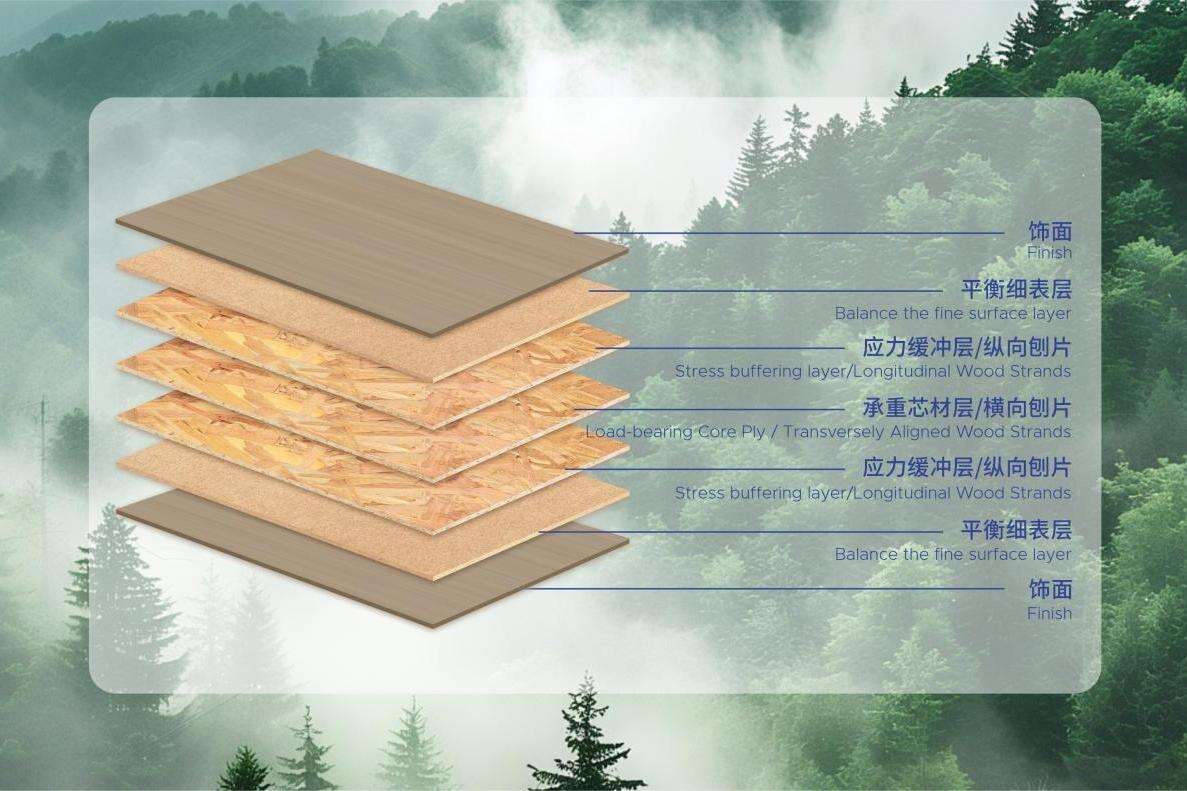
MDI engineered wood demonstrates superior dimensional stability that outperforms traditional wood products in challenging environmental conditions, providing reliable performance across diverse climate zones and applications. The advanced manufacturing process creates a homogeneous structure with consistent density distribution that resists expansion and contraction forces typically affecting natural wood materials. Moisture absorption rates remain significantly lower than conventional lumber, preventing the warping, cupping, and twisting that compromise structural integrity and aesthetic appeal. This stability proves crucial in regions with high humidity or frequent temperature fluctuations where traditional wood materials fail prematurely. The engineered structure maintains tight tolerances even when exposed to moisture cycles, ensuring proper fit and function in precision applications such as cabinetry and millwork. Builders rely on this predictable behavior to maintain straight walls, level floors, and properly aligned structural elements throughout construction and beyond. The resistance to dimensional change eliminates gaps that develop between boards in traditional wood applications, reducing air infiltration and improving energy efficiency. Moisture resistance extends the service life of structures by preventing rot, mold, and insect damage commonly associated with wood degradation in wet conditions. The stable dimensions reduce callback issues for contractors by preventing settling, shrinkage, and movement that can cause drywall cracks, door misalignment, and other building defects. Quality control during manufacturing ensures consistent moisture content throughout each panel, eliminating internal stresses that cause movement during installation. The dimensional stability supports precision construction techniques where tight tolerances are essential for proper assembly and long-term performance. Architects specify MDI engineered wood with confidence, knowing that design dimensions will be maintained throughout the building's lifespan without accommodation for significant movement. The predictable behavior simplifies construction planning and reduces the need for expansion joints and adjustment mechanisms typically required with conventional wood materials.


 EN
EN